
Anti-Bogging Plates and Trackway: Getting Out, and Staying Out, of Soft Ground
2026-08-19 · Team Tecnico SIGMA
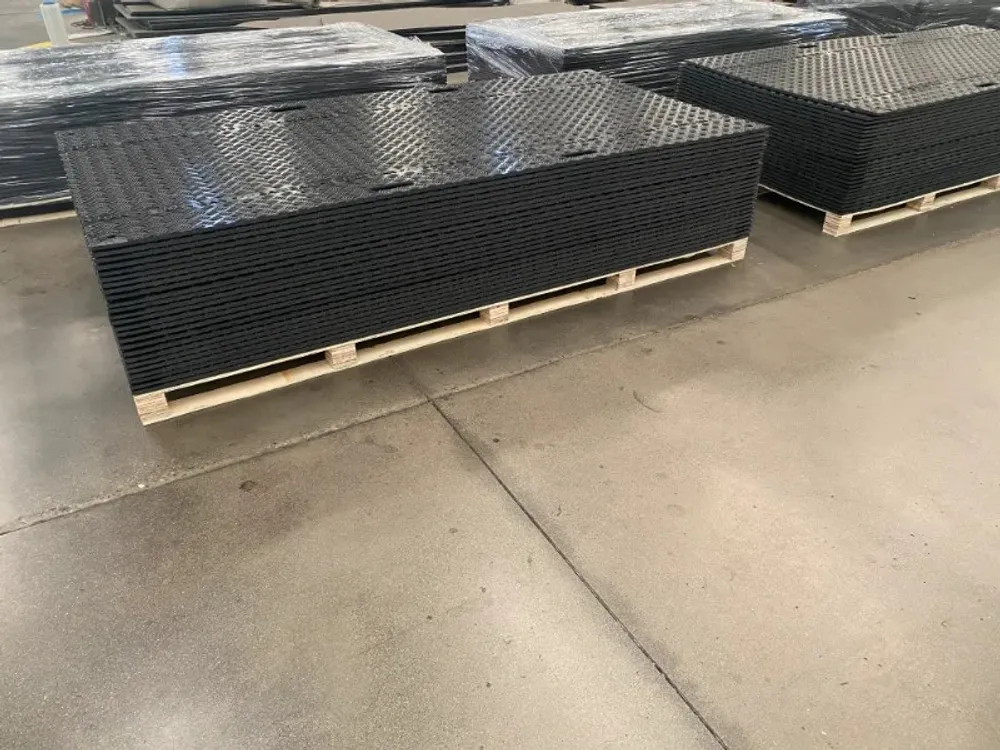
Recovery boards and HDPE trackway solve two different soft-ground problems — one gets a stuck vehicle moving, the other stops it getting stuck. How they compare in mud, sand, and snow, and when to use each.
Two products, two problems
Soft ground gets dealt with in two ways, and confusing them wastes money. A recovery board — a plaque anti-enlisement in French — is a short, ridged board you wedge under a spinning wheel to regain traction and drive out. Trackway plates are large panels you lay before anything drives, so no wheel ever loses traction in the first place. One is a rescue tool carried in the vehicle; the other is a surface built for the route. A 4x4 crossing a beach needs the first. A site with lorries arriving every day needs the second.
Mud, sand, and snow behave differently
Mud fails by shear: the wheel churns until it is sitting on slurry with no bearing left, so the fix is to spread the load over an area wide enough that the soil below stays intact. Sand fails by flow — grains move out from under the tyre, so what matters is a surface that does not let the wheel dig a bowl. Snow and frozen ground sit somewhere between the two and change through the day as they thaw. A ridged recovery board grips in all three but only across its own short length; a continuous plate run carries a vehicle across the whole soft section, which is why a route that is regularly driven ends up on trackway rather than on boards.
When a recovery board is the right tool
Recovery boards earn their place in vehicle kit: light, cheap, carried permanently, and the fastest way to free a stuck wheel when there is no plant nearby. They are a solution for the occasional crossing and for genuine emergencies. Their limit is exactly what makes them portable — they cover a metre or so of ground, so getting a vehicle across a long soft stretch means leapfrogging boards forward, which is slow and puts a person in the mud beside a moving wheel every time.
When to lay a proper trackway instead
Once the same soft ground is being crossed more than a few times — a site entrance, a field access, a compound in winter — a laid surface is the cheaper answer. HDPE panels spread the wheel load across their full area, link edge to edge into a continuous run, and can be lifted and moved when the route changes. On very soft or waterlogged ground the answer is a wider or longer run rather than a thicker plate, because bearing capacity comes from the soil, not the plastic. The relevant products are our temporary roadway panels for driven routes and standard ground protection mats for lighter access and parking.
Building a soft-ground route that lasts
Plan the route before laying anything: identify the wettest section, keep the run continuous through it, and pin the panels so turning wheels cannot open gaps between them. Give vehicles a straight approach where possible, because most damage happens where a wheel turns rather than where it rolls. Keep a set of recovery boards in the vehicle anyway — trackway prevents the problem, boards handle the day something drives off the edge of it. The detailed selection logic for panel thickness and load is in the trackway plate buyer's guide.
Ti servono piastre per un progetto come questo? Richiedi un preventivo — rispondiamo entro un giorno lavorativo. Oppure scopri tutta la gamma di prodotti.
Richiedi un preventivoArticoli correlati
Logging Mats: A Buyer's Guide for Soft and Wet Ground
How logging mats hold up a haul road through soft or wet timber ground, how they differ from dragline mats, and how to size HDPE against the machines that will cross them.
Leggi →
Ground Mats for Parking Lots: Temporary and Overflow Parking Surfaces
How HDPE ground mats turn grass, gravel, and made-up ground into working parking — when to use solid mats, when a grass grid is the better answer, and how to size for car and van traffic.
Leggi → Lastre per il controllo del trascinamento fango in cantiere: tenere il fango fuori dalle strade pubbliche
Come le lastre d'accesso in HDPE supportano il controllo del trascinamento fango alle uscite di cantiere — tenendo gli pneumatici su una superficie stabile così meno fango raggiunge le strade pubbliche, accanto ai requisiti FODS e SWPPP.
Leggi →