
Japanese Plastic Shikiita Brands: A Buyer's Guide to Resin Ground Mats
2026-08-19 · SIGMA Technical Team
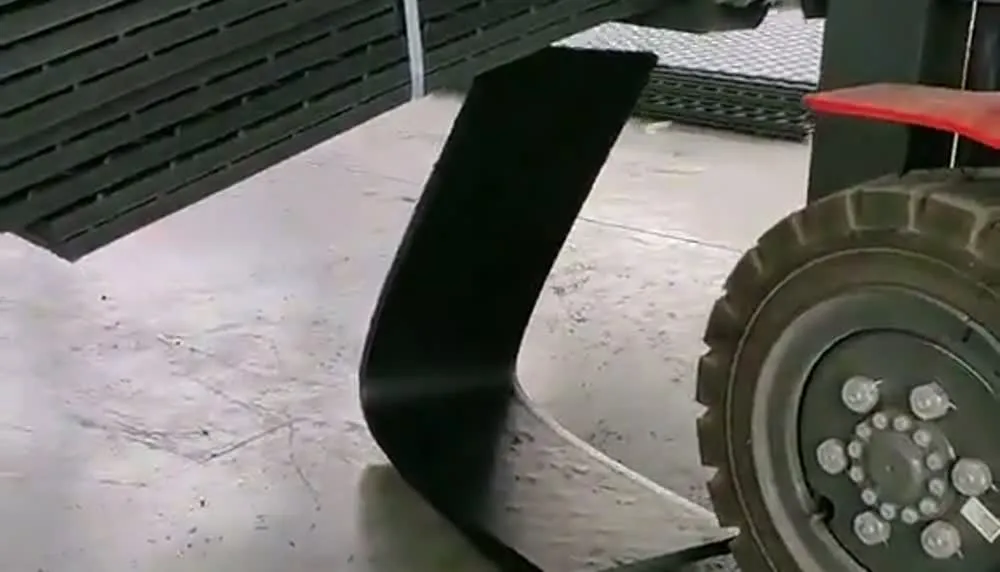
The resin shikiita brands Japanese sites specify most often — Super Ju-Lite, Repi Board, W-Board, Koujiban and Tough Mat — what each is known for, and where a factory-direct HDPE mat fits alongside them.
A market with its own vocabulary
Japan buys plastic ground mats under names that do not translate directly. The product is a shikiita (敷板) — literally a laying board — and the plastic version is often shortened on site to purashiki (プラシキ). Panels are specified in traditional shaku sizes rather than metric round numbers, so a 3×6 board means 910×1820 mm and a 4×8 board means 1219×2438 mm. That vocabulary matters when comparing suppliers, because a Japanese rental catalogue and an overseas manufacturer's spec sheet can describe the same panel in numbers that look nothing alike — the shikiita sizes and prices guide works through the conversions.
Super Ju-Lite
Super Ju-Lite, from Keiyo Kogyo, is one of the names that comes up first in Japanese resin shikiita procurement. It is generally specified as a lightweight resin board for site access and temporary roadways, sold in the standard 3×6 and 4×8 footprints with variants aimed at different traffic weights. Its position in the market is largely built on being a familiar, widely-handled product that rental yards and contractors already know how to quote.
Repi Board and W-Board
Repi Board, associated with Hoshin, is another resin board specified for repeated site use, and is typically found in the same size range as other domestic panels. W-Board, from Wood Plastic Technology, sits slightly apart: it is a wood-plastic composite rather than a straight resin moulding, which gives it a different weight and stiffness profile from a purely plastic board. Buyers comparing the two usually end up weighing handling weight against rigidity under a concentrated load, which is the same trade-off that decides between plastic and timber matting anywhere else.
Koujiban and Tough Mat
Koujiban (こうじばん) is used both as a product name and, loosely, as a category term for reinforced plastic site boards, so it is worth confirming exactly which panel a quotation refers to. Tough Mat is likewise specified for heavier-traffic site access. Across all of these, the published information tends to describe intended use and panel format rather than a standardised bearing figure, so like-for-like comparison usually means going back to thickness, material, and the load actually crossing the panel rather than trusting a product name to imply a capacity.
Where a factory-direct HDPE mat fits
Domestic brands are the straightforward choice when a site needs a handful of boards next week — the stock is local, the rental channel is established, and there is no import lead time to plan around. Factory-direct import becomes worth pricing at a different scale: when a contractor or rental fleet is buying panels by the container rather than by the pallet, when a specific thickness, colour, or moulded logo is wanted, or when the same specification will be reordered over several years. Our standard HDPE ground protection mats ship in the 4×8 ft format that maps onto the Japanese 4×8 board, with heavier sections available for plant traffic. The honest trade-off is lead time and minimum order quantity against unit cost, and it only favours import above a certain volume — tell us the panel size and annual quantity and the comparison is easy to run before committing. All trademarks belong to their respective owners. SIGMA is an independent manufacturer and is not affiliated with the brands mentioned.
Need mats for a project like this? Request a quote — we reply within one business day. Or explore the full product range.
Request a QuoteRelated articles
DICA vs Bigfoot Outrigger Pads: How the Two Brands Compare
DICA and Bigfoot are the two names most crane and boom-truck crews reach for first when buying outrigger pads — how their positioning differs, who else makes them, and when a factory-direct HDPE pad fits the job.
Read →
AlturnaMats Alternative: Factory-Direct HDPE Ground Protection Mats
Looking for an AlturnaMats alternative? How factory-direct HDPE ground protection mats compare on material, sizing, connectors, MOQ, and lead time — and when importing actually makes sense.
Read →
Crane Mat & Ground Mat Brands: A Buyer's Guide
A buyer's map of the crane mat and ground protection mat market — North American HDPE mat brands, Canadian rig mat suppliers, European Fahrplatten brands, and where factory-direct manufacturers fit in.
Read →