
Filling Grass Grid Pavers with Gravel: A Practical Guide
2026-07-13 · SIGMA Technical Team

How to fill grass grid pavers with gravel instead of turf — which aggregate to use, how to fill and compact the cells, and where a gravel finish outperforms grass.
When gravel beats grass
Grass in a grid needs light, water, and rest periods to stay healthy. On a surface that sees daily traffic — a busy driveway entrance, a permanent parking bay, a fire access lane — grass thins and dies because the wheels never give it a break. Gravel does not care. A gravel grid filled with crushed stone carries the same traffic, drains just as well, and looks tidy year-round without mowing, watering, or reseeding. Wherever the traffic is too frequent for a living surface, gravel is the better infill.
Choose the right aggregate
Angular crushed stone locks together under load; rounded pea gravel rolls apart and scatters out of the cells. Use a well-graded aggregate — typically 4–8 mm or 6–10 mm angular stone — so the particles interlock and stay put under tyres. The colour is a design choice: grey granite, buff limestone, and recycled glass aggregate all work structurally, so pick for the look you want against the grid and the surrounding landscape.
Filling the cells
Spread the gravel across the installed grid with a shovel or a mini-loader, working it into the cells with a stiff broom or a vibrating plate on a low setting. Fill to just below the top of the cell walls — a flush fill spills under traffic, while an under-fill exposes the grid ribs and looks unfinished. A consistent, slightly recessed fill gives the cleanest surface and keeps loose stones from migrating onto adjacent paving.
Compact and top up
After the first fill, run a light vibrating plate across the surface to settle the aggregate, then top up any low spots and compact again. The goal is a firm, level infill that does not shift under a turning wheel. On a heavily trafficked surface, expect to top up once after the first few weeks of use as the aggregate beds in, then rarely after that — angular stone in a grid stabilises quickly.
Drainage with a gravel fill
A gravel-filled grid is fully permeable: rain passes through the stone and into the sub-base below, just as it does with turf. That keeps the surface off the stormwater calculation and avoids the puddling and run-off a sealed surface creates. Build the sub-base with a slight fall — typically 1–2% — so water moves through to a soakaway rather than pooling, the same build-up described in how to prepare the subbase for grass grid pavers.
Mixing gravel and grass zones
Many projects use both infills in one layout: gravel in the tyre tracks and high-traffic zones, turf in the parking bays and verges. The contrast defines the driveway or car park line without kerbs, and both zones drain vertically. A turf reinforcement grid takes either fill in the same panel, so the decision is per zone, not per product — and the full cost comparison, infill included, is in how much grass grid pavers cost.
Need mats for a project like this? Request a quote — we reply within one business day. Or explore the full product range.
Request a QuoteRelated articles
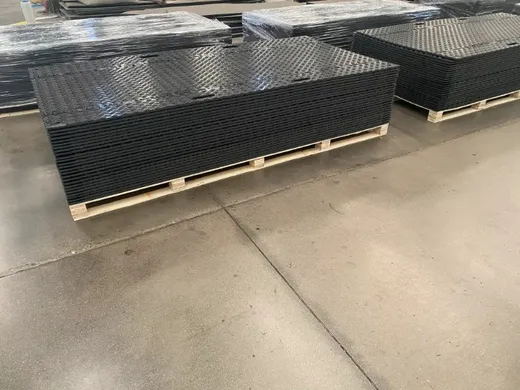
Logging Mats: A Buyer's Guide for Soft and Wet Ground
How logging mats hold up a haul road through soft or wet timber ground, how they differ from dragline mats, and how to size HDPE against the machines that will cross them.
Read →
Japanese Plastic Shikiita Brands: A Buyer's Guide to Resin Ground Mats
The resin shikiita brands Japanese sites specify most often — Super Ju-Lite, Repi Board, W-Board, Koujiban and Tough Mat — what each is known for, and where a factory-direct HDPE mat fits alongside them.
Read →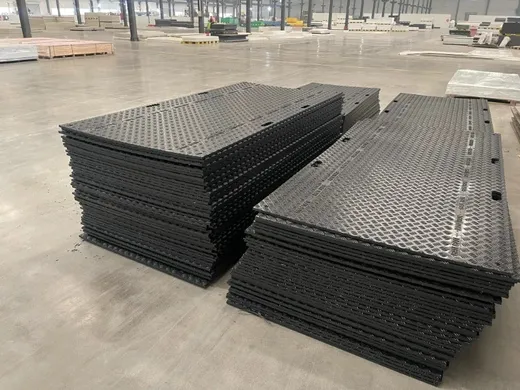
Ground Mats for Parking Lots: Temporary and Overflow Parking Surfaces
How HDPE ground mats turn grass, gravel, and made-up ground into working parking — when to use solid mats, when a grass grid is the better answer, and how to size for car and van traffic.
Read →