
Plastic Shikiita Sizes and Prices: A Buyer's Guide
2026-08-18 · Equipo Técnico de SIGMA
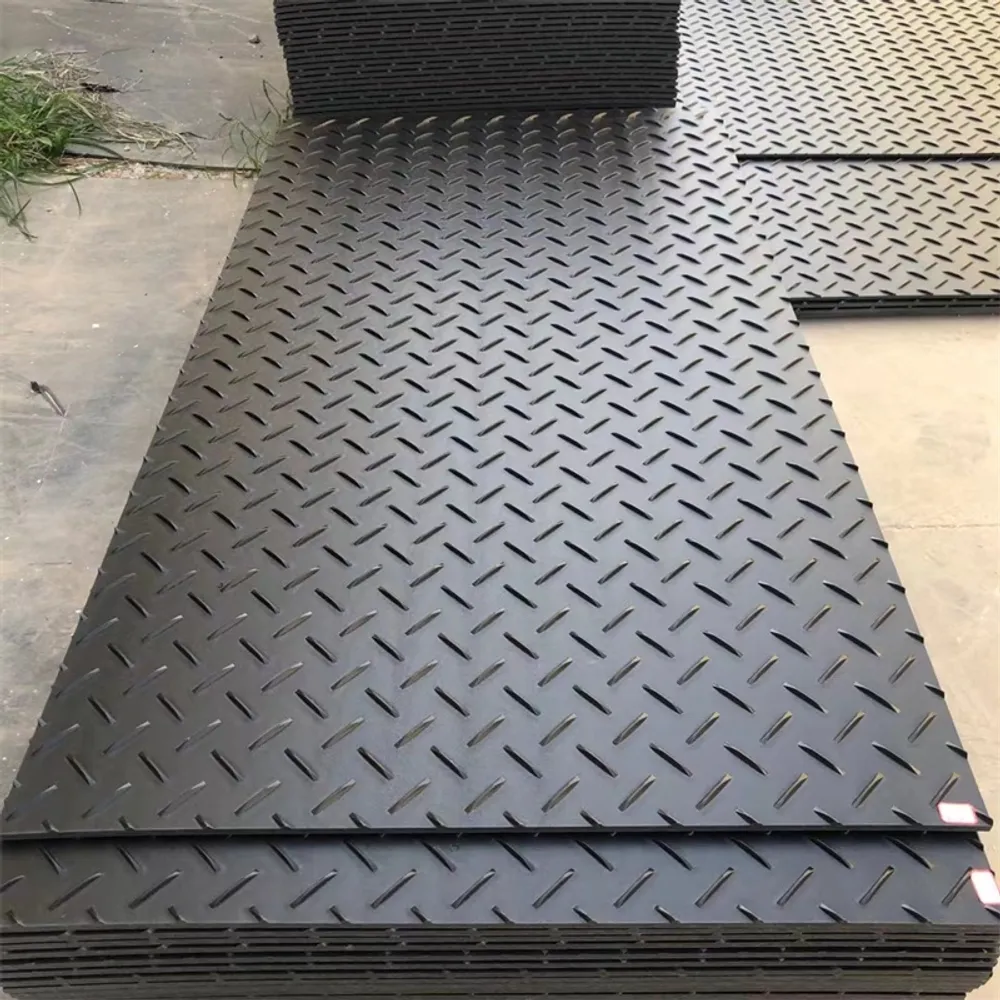
What shikiita sizes mean in millimetres, how plastic (plashiki) compares with steel plate, and what actually drives the price of a plastic ground protection board.
What shikiita and plashiki mean
In the Japanese construction and equipment-rental market, a ground protection board laid under tyres, tracks, or outrigger feet is called shikiita (敷板). When the board is resin rather than steel, it is often shortened to plashiki (プラシキ) — plastic shikiita. Both terms describe the same job an English-speaking buyer would call a ground protection mat or a temporary roadway panel: a flat, load-spreading board laid down to protect the surface underneath and give equipment a stable footing.
The two standard sizes
Japanese shikiita is sold to two traditional sizes carried over from timber board dimensions: 3-shaku by 6-shaku, which comes out to 910 x 1820 mm, and 4-shaku by 8-shaku, at 1219 x 2438 mm. Both sizes map directly onto standard international ground protection panel dimensions — the 4 x 8 ft class covers the 4-shaku by 8-shaku size almost exactly, which is why a standard ground protection mat built to the common 4 x 8 ft spec drops straight into a site plan written around plashiki sizing without any resizing needed. The 3 x 6 shaku size is the lighter, easier-to-handle option for tighter spaces where a crew is moving boards by hand.
Steel plate vs plastic board
Steel shikiita (敷鉄板) has been the traditional standard for decades, and it still wins on raw point-load capacity in a fixed location. But it comes with real handling costs: a steel plate the size of a 4 x 8 ft panel is heavy enough that laying and lifting it needs a crane or a forklift, it rusts if left outdoors, and a wet steel surface is genuinely slippery underfoot. A plastic board of the same footprint weighs a fraction as much, so a two-person crew moves it by hand, it will not rust, and a treaded surface keeps traction wet or dry. For repeated relocation across a site, or anywhere the board has to double as a walking surface, plastic overtakes steel even though steel still holds the edge on the very heaviest static point loads.
What actually sets the price
Three factors set the price of a plastic board, not the brand name on it: total surface area, thickness, and quantity ordered. A thicker board built for heavier equipment costs more per panel than a thin board meant for pedestrian and light-vehicle traffic, and area scales the cost close to linearly — a 4 x 8 ft panel costs roughly double a 3 x 6 ft panel of the same thickness. Buying in volume for a full site or a rental fleet brings the per-panel cost down meaningfully compared with ordering a handful of boards at a time, which is where working directly with a factory rather than a small local supplier makes the biggest difference.
Choosing between the two sizes
Pick 3 x 6 shaku (910 x 1820 mm) for tight access, hand-carried jobs, and any spot where a crew needs to lay boards without machinery. The 4 x 8 shaku (1219 x 2438 mm) size — matched almost exactly by our standard ground protection mat — covers most haul-route and equipment-track work with fewer joints per metre than the smaller board. For a longer continuous road built from larger panels rather than hand-laid boards, a temporary roadway panel steps up the footprint again. Most working sites end up mixing sizes: the larger board for the main route, the smaller one for tight corners the larger board cannot reach.
¿Necesita placas para un proyecto así? Solicitar presupuesto — respondemos en un día hábil. O explore toda la gama de productos.
Solicitar presupuestoArtículos relacionados
Jack and Outrigger Base Plates: A Buyer's Guide
Why every jack, outrigger, and stabiliser leg needs a base plate underneath it, and how to pick the right size for cranes, aerial platforms, caravans, and scaffolding.
Leer →
Guía de tamaños y dimensiones estándar de alfombras de grúa
Tamaños y dimensiones estándar de alfombras de grúa explicados: formatos de panel habituales, cómo se relaciona el grosor con la carga, y HDPE frente a madera para el dimensionamiento.
Leer →
Qué alfombra de protección de suelo necesita cada máquina
Guía de obra equipo por equipo: qué alfombra de protección de suelo le corresponde a cada máquina. Almohadillas bajo los estabilizadores de las grúas, alfombras para orugas en excavadoras y buldóceres, y alfombras de acceso y paneles de calzada temporal para los camiones que circulan sobre terreno blando.
Leer →