
Ground Protection Mat Buying Guide: How to Choose Access Mats by Load Class
2026-05-31 · SIGMA Technical Team
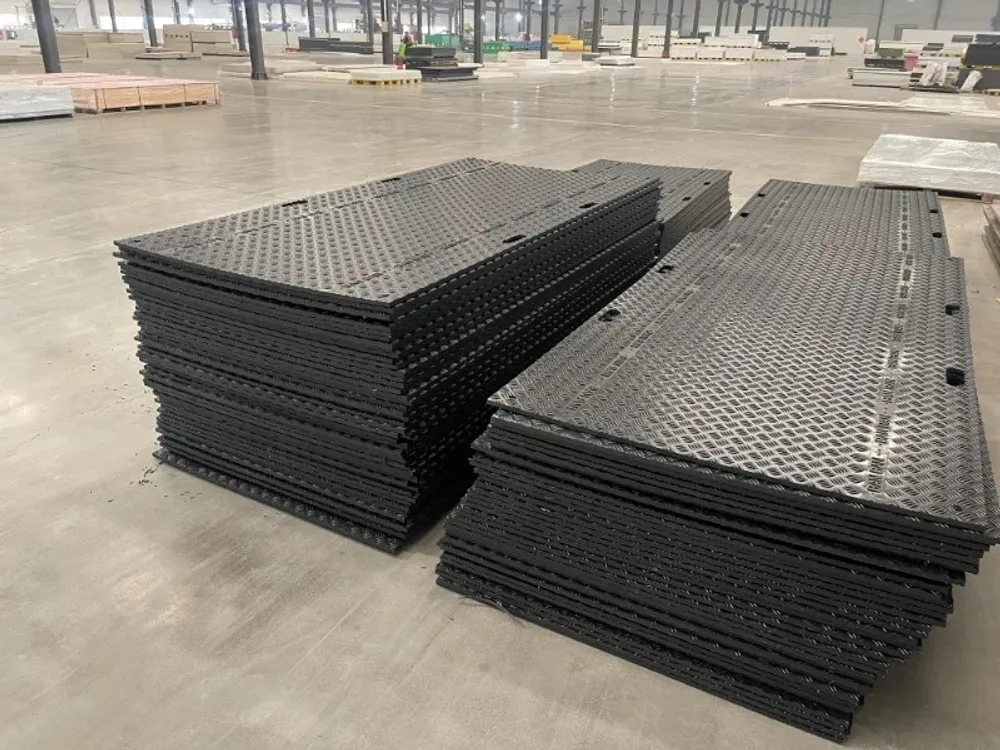
A specifier’s guide to choosing ground protection mats and access mats by duty class. Compare light, medium, and heavy-duty HDPE mats — load range, thickness, ground conditions, and typical applications — in one reference table, with a buyer’s checklist and FAQ.
Choose by duty class, not by guesswork
Specifying ground protection mats comes down to one question asked in the right order: what load crosses the mat, over what ground, how often? Get that right and the mat spreads the load, the surface underneath survives, and the panels redeploy job after job. Get it wrong and a too-light mat over-flexes and punches in, or a too-heavy mat ties up budget and needs plant to handle. This guide sorts the whole category into three duty classes — light, medium, and heavy — so you can match a class to your job in one read, then drop to the exact product within it. It expands on our shorter walkthrough of how to choose the right ground protection mat with a full comparison table and a specifier’s checklist.
What a ground protection mat actually does
A ground protection mat — also called an access mat, track mat, or temporary roadway mat — is a portable panel laid over soft, wet, or sensitive ground to create a stable, reusable working surface. Its job is to spread a concentrated wheel, track, or outrigger load across a wide footprint so the ground bearing pressure drops to a level the soil can carry. It does not improve the soil; bearing capacity still comes from the ground beneath, which is why every load figure assumes a competent, evenly prepared sub-grade. Most modern mats are moulded from HDPE (high-density polyethylene), which is why HDPE dominates this category: it is roughly 95% lighter than a steel plate of equal size, flexes under load and springs back without cracking, is non-conductive (a safety win on utility and electrical work), and is rot-proof, washable, and recyclable for a life measured in years rather than a single use.
Light, medium, heavy: the load-class reference table
The table below maps the three duty classes to load range, typical thickness and panel size, suitable ground, and the jobs each class is built for. Treat the tonnage figures as typical spread-load ranges over prepared ground for a competent surface — not point-load ratings under a single track grouser — and always size to the heaviest realistic point load with a safety margin.
| Duty class | Typical load range | Thickness | Common panel size | Ground & traffic | Typical applications |
|---|---|---|---|---|---|
| Light duty (turf / pedestrian) | Foot traffic & light vehicles up to ~5–8 t axle | ~8–12.7 mm (5/16–1/2 in) | 2x8 ft, 3x8 ft, 4x8 ft | Firm, prepared or grassed ground; low-frequency traffic | Event flooring, lawn & turf protection, pedestrian walkways, light landscaping access |
| Medium / standard duty | Cars, vans, and light plant up to ~20–40 t GVW | ~12.7–16 mm (1/2–5/8 in) | 4x8 ft (the industry default), 2x8 ft | Competent sub-grade to slightly soft ground; regular site traffic | General construction site access, temporary parking, utility & cable works, driveway protection |
| Heavy duty | Loaded trucks, dozers & tracked excavators, ~40–80+ t | ~16–25 mm (5/8–1 in) | 4x8 ft, plus larger 8x14 ft mats & bog mats | Soft, wet, or marginal ground; high-frequency or tracked traffic | Haul roads, crane & outrigger pads, oil & gas / pipeline access, drilling rig mats, bog mats over peat & marsh |
Match the class to the ground, then the machine
Read the ground first. On a firm, level sub-grade a standard (medium-duty) ground protection mat carries typical site traffic comfortably. As the ground softens you do not just get a thicker mat — you get a bigger footprint: over saturated soil, peat, or marsh you step up to a heavy-duty ground protection mat or an extra-heavy track mat (bog mat) to drop ground bearing pressure to what the soil can actually bear. Only then layer in the machine: tracked plant and concentrated outrigger loads need the heavy class even on decent ground, because the point load under a grouser or a crane leg is far higher than the average. The mechanics of that are covered in understanding ground protection mat load ratings, and crane work specifically in our outrigger pad sizing guide.
Selection by application
Construction site access is the medium-duty default — a 4x8 ft standard mat for site roads and working platforms, stepping to heavy duty for loaded haul routes; see ground protection mats for construction site access. Turf and event work is light duty: a clear turf protection mat lets light reach the grass for short-term cover, while a turf reinforcement grid reinforces a lawn for repeat traffic — more in protecting turf and landscaping. Oil & gas, pipeline, and utility access run heavy duty over remote, soft terrain, where HDPE’s non-conductive body is a safety advantage over steel. Equipment-rental fleets weigh duty class against utilisation and resale — the economics are in our buyer’s FAQ for rental fleets. Whatever the sector, the full range is on the applications page.
The buyer’s checklist
Before you order, run the panel against these six points:
- Load & duty class — size to the heaviest realistic point load (track grouser, outrigger, loaded axle), not the average, and keep a safety margin.
- Ground condition — firm sub-grade vs soft/wet ground decides footprint as much as thickness; soft ground pushes you to a larger heavy-duty panel or bog mat.
- Surface tread & traction — an aggressive diamond tread grips for vehicles and tracks; a finer face is safer underfoot. Reversible mats carry both so one product covers mixed traffic.
- Connection method — bolt-on link plates or cam/turn-lock couplers tie panels into a shift-resistant roadway for high-traffic runs; loose-laid is fine for short, light access.
- Material & reuse — recycled black HDPE is the economical, UV-stable default; virgin HDPE is for white or bright colours and event work. Both are reusable for years and recyclable at end of life.
- Logistics & handling — panel weight (a 4x8 ft mat is typically a two-person hand lift at ~30–40 kg), stack height per pallet, and lead time for the quantity you need.
Frequently asked questions
What size is a standard ground protection mat? The industry-standard panel is 4x8 ft (1.22 x 2.44 m). Light-duty turf and event mats also come in 2x8 ft and 3x8 ft, while heavy-duty access and bog mats run to 8x14 ft and larger for the biggest spread-load footprints.
How much weight can a ground protection mat hold? It depends on the duty class and, critically, on the ground beneath. As a spread-load guide over prepared ground, light-duty mats suit foot traffic and light vehicles, medium-duty mats take cars, vans, and light plant, and heavy-duty mats carry loaded trucks and tracked excavators in the 40–80+ t range. The mat spreads the load — actual capacity is limited by the soil’s bearing strength, so a competent person should confirm conditions for critical loads.
What is the difference between an access mat and a ground protection mat? The terms overlap. “Ground protection mat” usually means a lighter HDPE panel for site access and turf protection; “access mat” and “track mat” often imply heavier-duty panels — including timber or composite bog mats — for the softest ground and heaviest plant. By duty class, access/track/bog mats sit at the heavy-duty end of the same spectrum.
Are HDPE ground protection mats reusable? Yes. HDPE mats are designed for repeated use over many years: they wash down, resist rot and UV, do not corrode, and are recyclable at end of life — which is what makes them economical per use compared with single-use plywood or hired steel plate.
Need mats for a project like this? Request a quote — we reply within one business day. Or explore the full product range.
Request a QuoteRelated articles
Plaque de Roulage Buyer's Guide: Choosing HDPE Trackway Plates
How to choose a plaque de roulage — matching thickness to load, the difference between a car-weight plate and a TP site plate, what drives the price, and why cheap or second-hand plates often cost more.
Read →
Jack and Outrigger Base Plates: A Buyer's Guide
Why every jack, outrigger, and stabiliser leg needs a base plate underneath it, and how to pick the right size for cranes, aerial platforms, caravans, and scaffolding.
Read →
Plastic Shikiita Sizes and Prices: A Buyer's Guide
What shikiita sizes mean in millimetres, how plastic (plashiki) compares with steel plate, and what actually drives the price of a plastic ground protection board.
Read →