
Which Ground Protection Mat for Which Machine
2026-06-08 · SIGMA Technical Team
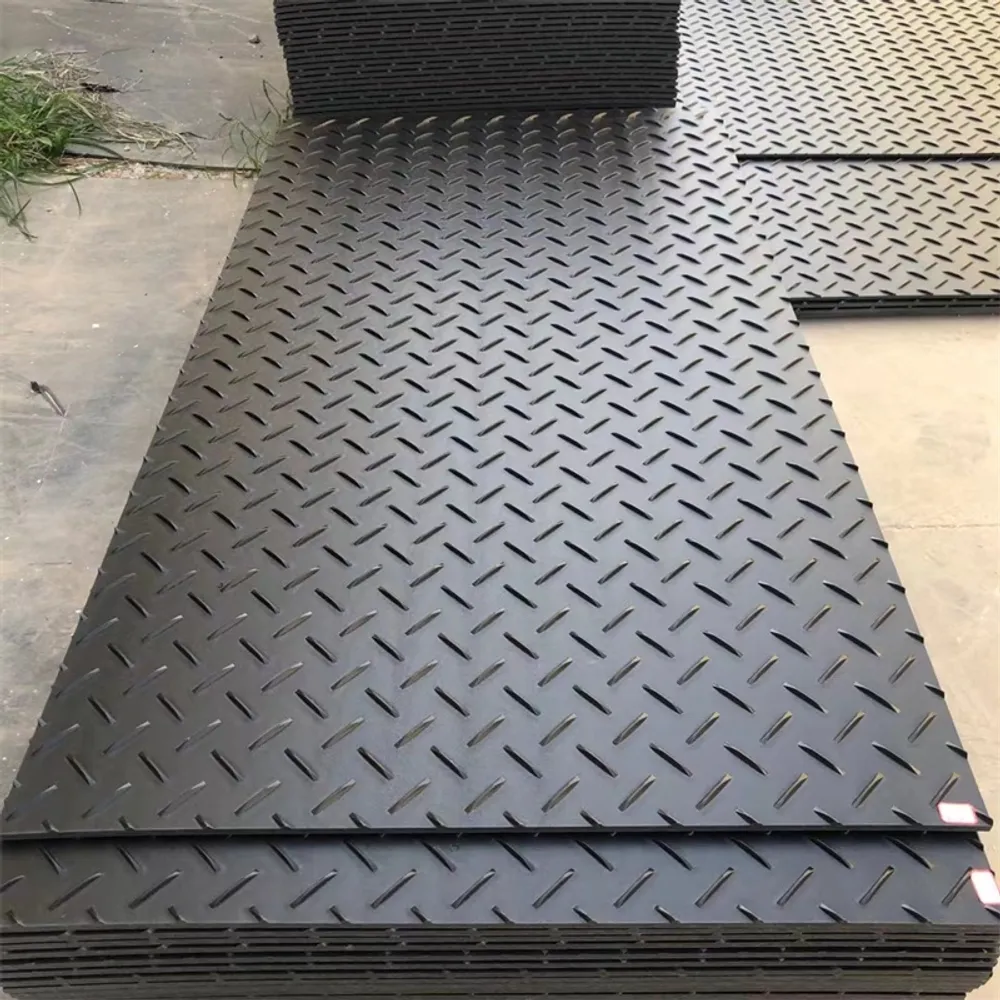
A site guide by equipment: which ground protection mat each machine needs — outrigger pads for cranes, track mats for excavators and dozers, access mats and temporary road surface mats for trucks on soft ground.
Start with the machine, not the mat
The fastest way to pick the wrong board is to shop for a mat before you have named the machine. A pad that carries a tracked excavator all day can still fail under a single crane leg, because the two load the ground in opposite ways: the excavator spreads its weight down two long tracks, while the crane drops it onto four small floats. So work the other way round: name the heaviest machine that will cross or stand, work out where its weight actually lands, and let that choose the mat — the same logic behind how to choose the right ground protection mat. The sections below walk the common machines one by one.
Mobile cranes and boom trucks: outrigger pads
A crane parks its whole rated load onto four small outrigger floats, so the ground sees an enormous point load under each leg. That is the job of outrigger pads — also sold as crane pads or crane outrigger pads — sized so the float pressure drops below what the soil can hold. The same goes for a backhoe working off stabilisers (backhoe outrigger pads) and for outrigger pads for bucket truck and aerial-lift work. For a square float a square crane outrigger pad from 18×18 to 48×48 in (450–1200 mm) spreads the leg cleanly, carrying a vertical working load of roughly 12 to 100-plus tonnes by size; for round feet a round outrigger pad of 12–48 in (300–1200 mm) matches the float at about 6 to 90 tonnes — and the sizing maths is set out in the crane outrigger pads sizing guide. For a crane walking under load you step up to full crane mats.
Excavators, dozers and tracked rigs: track mats
Tracked machines spread their weight along two long tracks, but on soft ground the grousers still cut in and the machine rocks and sinks. Track mats — track mats for heavy equipment — give the tracks a continuous, stable running surface so an excavator or dozer crosses without rutting; for the heaviest crawlers and dozer work you want dozer track mats rated for the section. A drilling or piling rig that has to stand and work needs the bigger footprint of rig mats, so a heavy crawler runs on an extra-heavy track mat — 7.5 × 14 ft, up to 4 in (100 mm) thick, spreading load at about 600–828 psi (≈42–58 kg/cm²) — and a static rig sits on a drilling rig mat rated to roughly 120 t spread and ~828 psi point. Match the section to the track pressure, not the machine badge — the figures are in understanding ground protection mat load ratings.
Loaded trucks and wheeled plant on soft ground
Wheels are where soft ground bites hardest: a loaded tipper or a telehandler puts its weight onto a handful of contact patches, and one spin in wet clay digs a trap. Mud track mats and vehicle track mats give the wheels grip and spread the load so the truck drives over instead of bogging in. For a firm sub-grade a standard ground protection mat — a ~37 kg 4 × 8 ft sheet good for about 80 t spread and ~200 psi point — carries most wheeled plant; over peat or saturated ground you size up to a heavy-duty ground protection mat at 16–19 mm thick, roughly 120 t spread and ~600 psi point. Where a whole route has to carry repeated truck traffic, lay a linked run rather than loose boards — the case study: temporary roadway over soft ground shows how that holds up.
Temporary roadways and site access
Once more than one machine is using the same line, you are no longer matting a machine — you are building a road. Access mats and site access mats turn a muddy entrance into a stable, all-weather route; a linked run of temporary road surface mats keeps trucks, vans and plant moving through the wet, and construction site access mats stop the trackout that follows them onto the public road. Build the route from temporary roadway panels — 2 × 4 m, bearing about 828 psi (~58 kg/cm²) — pick a diamond-tread access mat (around 90 t spread, ~250 psi point) where wheels need grip, and tie it together with an interlocking access mat rated to roughly 120 t spread so it does not creep apart under traffic — the full method is in ground protection mats for construction site access.
Match the mat to the heaviest thing that crosses
Two numbers decide every one of these jobs: the spread load a mat shares across its area, and the point load under a single leg, track, or wheel — roughly 200 psi under a standard mat, 600–828 psi under a heavy-duty or bog section. Cranes are a point-load problem and want a pad; tracked and wheeled plant are mostly a spread-load problem and want a roadway. When the ground itself is the weak link, footprint beats thickness — sometimes that means stepping from an access mat up to a bog mat, as in bog mats vs access mats. Name the machine, work out where its weight actually lands, then size the mat for that point with a margin on top. Get those two right and the spec is straightforward.
Need mats for a project like this? Request a quote — we reply within one business day. Or explore the full product range.
Request a QuoteRelated articles
Jack and Outrigger Base Plates: A Buyer's Guide
Why every jack, outrigger, and stabiliser leg needs a base plate underneath it, and how to pick the right size for cranes, aerial platforms, caravans, and scaffolding.
Read →
Plastic Shikiita Sizes and Prices: A Buyer's Guide
What shikiita sizes mean in millimetres, how plastic (plashiki) compares with steel plate, and what actually drives the price of a plastic ground protection board.
Read →
Standard Crane Mat Sizes & Dimensions Guide
Standard crane mat sizes and dimensions explained — common panel sizes, how thickness relates to load, and how HDPE crane mats compare to timber for sizing.
Read →