
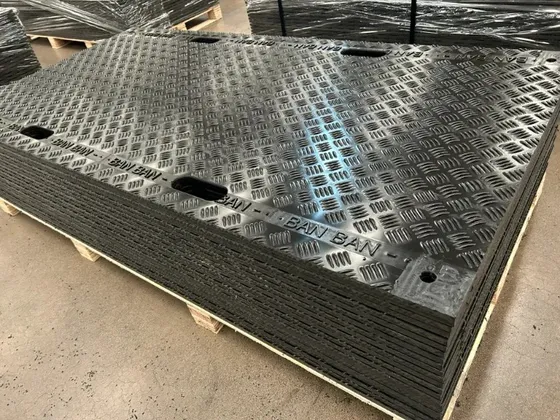
 Heavy-Duty
 Heavy-Duty Ground Protection Mat
Thicker, denser 4×8 ft heavy-duty ground protection mat for loaded trucks, dozers, and excavators.
- 4×8 ft
- 5/8–3/4 in
- ~50 kg
Products / Heavy-Duty
Heavy-duty rig mats built for oil & gas drilling pads — moulded from virgin UV-stabilised HDPE with impact modifiers for extreme service. These composite/HDPE oilfield mats are chemical-resistant and rated across a wide temperature band, with a long service life and high salvage value.
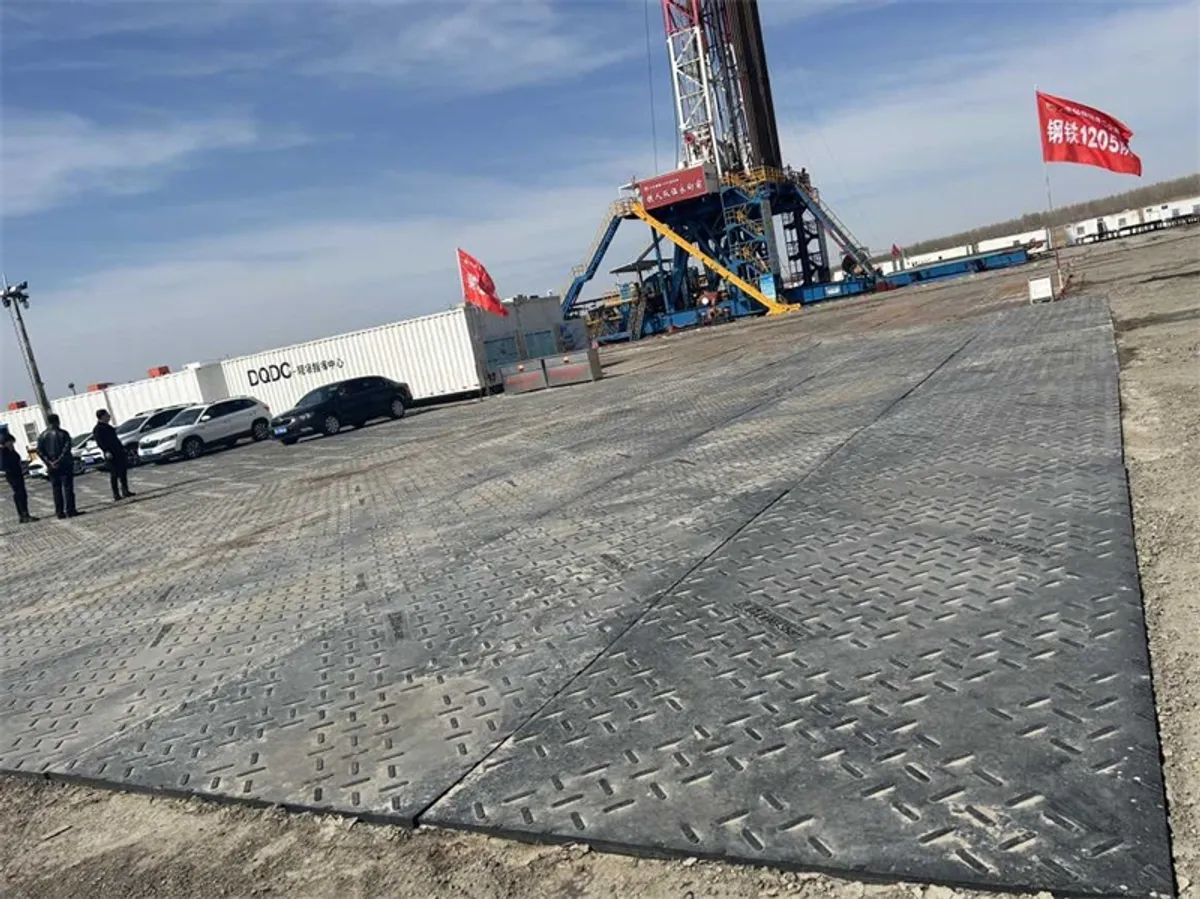
Rig mats face conditions a general access mat is not built for: spilled hydrocarbons and drilling fluids, static around the rig, Arctic cold and desert heat, and years on a lease pad. These oilfield mats are moulded from virgin HDPE with impact modifiers as composite rig mats built for that duty, not a repurposed construction panel — see ground protection mats for oil & gas sites. Oil rig mats is the usual shorthand on site; tender documents and equipment schedules more often spell it out as oil drilling rig mats.
HDPE shrugs off the oils, brine, and drilling fluids that degrade timber and rubber, and the formulation is anti-static for work around the rig floor. It stays serviceable from −50 °C to +60 °C, so the same spec works on a Canadian winter lease and a Gulf summer pad without going brittle in the cold or soft in the heat.
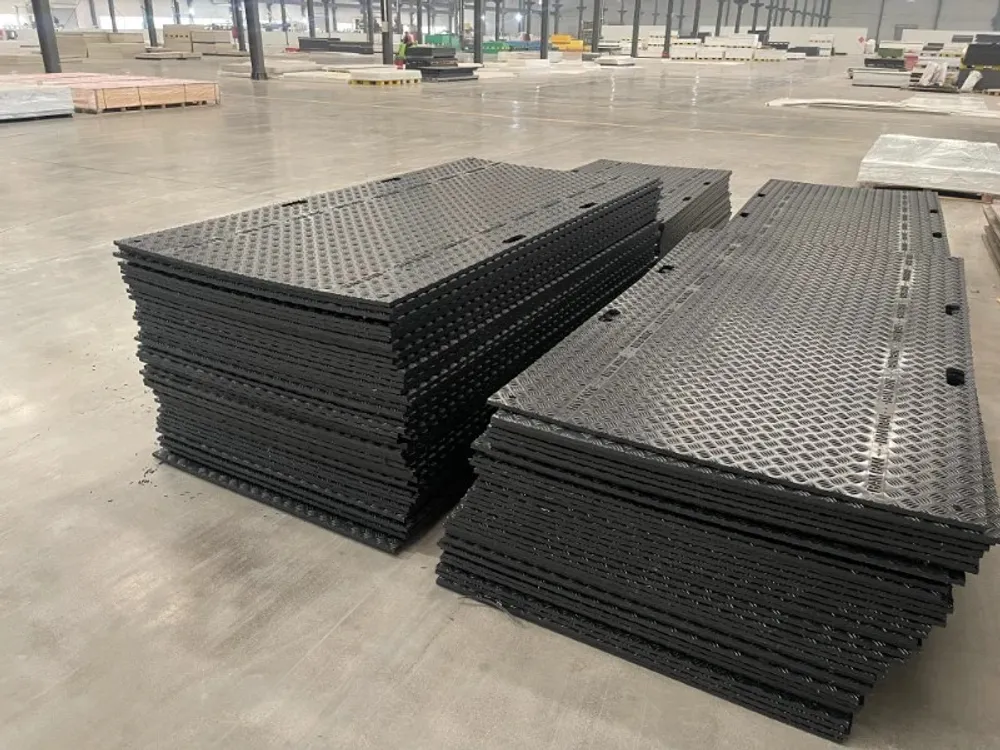
Available 4×8 ft up to 7.5×14 ft and 1/2–4 in thick, the mat spreads loads to ~120 t and around 828 psi point on prepared ground, linking by flange/pin or bolt into interlocking oilfield mats that form a continuous platform. A 10–15 year service life and high salvage value matter on multi-well programs where matting board rig sections are recovered and redeployed rig move after rig move.
Drill-floor and setback areas, rig-move access roads, and well-site lease pads. We offer these composite/HDPE rig mats for sale and wellsite mats for rent by the container; for non-oilfield heavy access the heavy-duty mat or the extra-heavy bog mat is more economical, but where chemicals, static, and temperature extremes are in play, oilfield rig mats earn their premium.
Rig mats for rent make sense for a short mobilisation — a single well pad, a pipeline tie-in, or a program with an uncertain start date — where a day rate avoids tying up capital in mats that might sit idle afterward. Rental fleets exist for exactly that reason, and a short job is a legitimate case for renting. The economics flip once a program runs multi-well or year-round: at that point the accumulated day rate over a season typically exceeds what the same mats cost to buy outright, and owned mats carry no return-freight deadline, no damage-waiver dispute, and a 10–15 year service life that keeps paying back long after the rental clock would have stopped. As a factory that sells composite/HDPE rig mats direct, we quote by area covered rather than by the piece, so a large multi-well program often lands close to rental pricing on day one and cheaper on every day after.
Lease pads have run on three materials for decades: timber mats, steel mats, and composite rig mats moulded from HDPE. Timber is cheap up front but absorbs drilling fluids and brine, splinters under repeated rig-move traffic, and is usually written off after one or two seasons in wet climates. Steel mats do not rot, but they are heavy to handle, conduct electricity near live equipment, and rust at welds and cut edges once the galvanising wears through. Composite rig mats and plastic rig mats close both gaps: HDPE will not absorb hydrocarbons or brine, will not conduct, and does not corrode, so the same mat goes from a Canadian winter lease to a desert summer pad without degrading. The trade-off is upfront cost per mat — composite runs above timber and roughly in line with steel — offset by the 10–15 year service life and high salvage value that let operators recover and redeploy the same mats across a multi-well program.
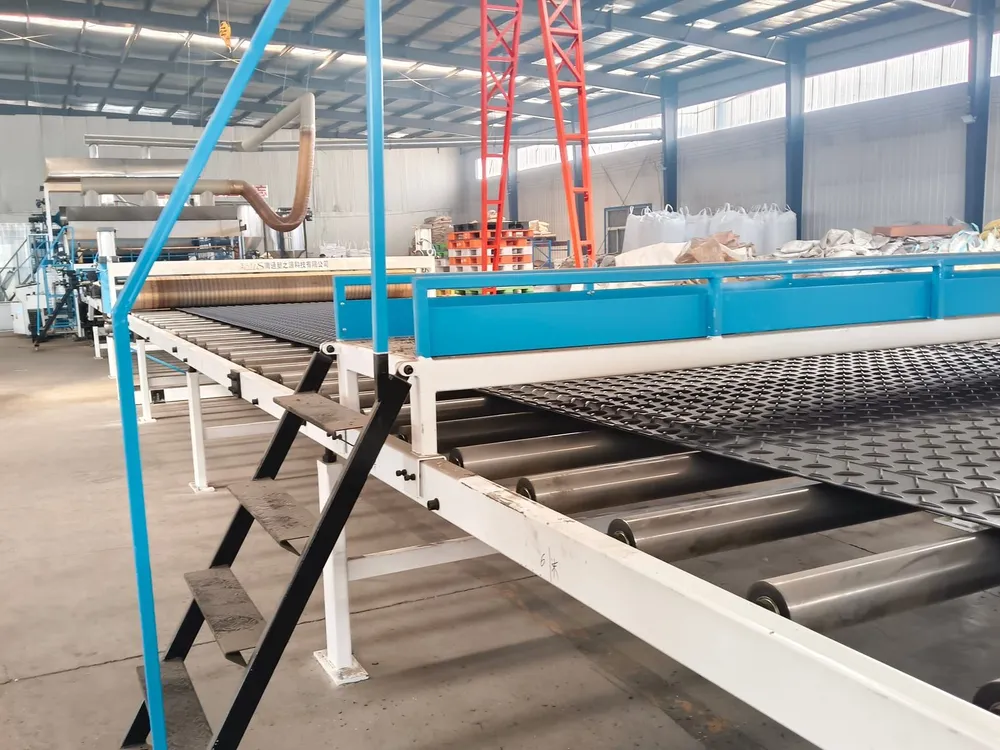
Buying from a rig mat manufacturer rather than a distributor cuts a margin layer out of the price and opens up OEM sizing that a stock catalogue does not offer — non-standard panel lengths to fit an existing bolt or pin pattern, thickness tuned to a specific rig’s outrigger loads, or a colour run for a fleet that tracks mats by site. We mould these oilfield mats in virgin, impact-modified HDPE to the 4×8 ft–7.5×14 ft and 1/2–4 in range as standard, and can quote custom dimensions against your rig-move plan and target bearing pressure — send the load and ground data and we return a sizing recommendation with the quote, not just a price list.
The salvage value that makes buying rig mats pay off depends on inspecting and grading panels between moves, not just stacking them back on the truck. Before a mat goes on the next lease pad, check the connector points for wear, look for cracks that run through more than a third of the panel thickness, and confirm the surface has not been gouged deep enough to expose the internal structure — HDPE that has taken this kind of damage should be retired rather than risked under a rig-move load. Panels that pass inspection go straight back into rotation; a mat rated for 10–15 years of service only gets there if it is checked, not just reused until it visibly fails.
A multi-well program needs a different order than a single pad: enough mats to cover drill-floor and setback areas plus rig-move access roads at once, with spares held back for panels that come off inspection needing replacement mid-program. We quote by the container for these volumes, and because the mats are moulded from virgin, impact-modified HDPE rather than reclaimed material, the panels delivered on well one perform the same as the panels still in service on well twelve — consistency that matters when an operations team is scheduling rig moves months in advance and cannot afford a batch of mats that wears faster than the rest.
Not every well site needs oilfield-grade mats. A short access track outside the chemical zone, or a one-off site visit, is often served well enough by a standard or heavy-duty ground protection mat at a lower cost per panel. Reach for rig mats specifically when the ground protection sits inside the chemical and static-control zone, needs to survive years of rig moves, or has to perform across the −50 °C to +60 °C range this product is rated for — outside those conditions, a general-purpose mat does the job for less.
| Size | 4×8 ft to 7.5×14 ft |
|---|---|
| Thickness | 1/2–4 in |
| Load | up to ~120 t spread · ~828 psi point |
| Temperature | −50 °C to +60 °C |
| Material | Virgin HDPE (impact-modified) |
| Connectors | Flange / pin or bolt |
Quoted load figures assume a competent, evenly prepared sub-grade. A mat spreads and distributes load — it does not turn soft ground into hard standing — so size to ground bearing pressure (load ÷ contact area).
From −50 °C to +60 °C. The virgin, impact-modified HDPE stays flexible on an Arctic winter lease and holds its strength on a Gulf summer pad without going brittle in the cold or soft in the heat — the same formulation resists spilled hydrocarbons, drilling fluids, and static around the rig floor.
Typically 10–15 years, with high salvage value that lets operators recover and redeploy panels rig move after rig move on multi-well programmes. Available 4×8 ft up to 7.5×14 ft and 1/2–4 in thick, they spread loads to roughly 120 t and ~828 psi point on prepared ground, linking by flange, pin, or bolt into a continuous platform.
Tell us quantity, destination port, and any questions — we reply within one business day.
Heavy-Duty Thicker, denser 4×8 ft heavy-duty ground protection mat for loaded trucks, dozers, and excavators.
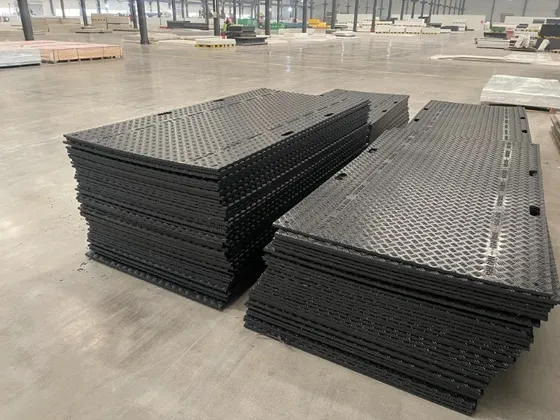 Heavy-Duty
 Large-format bog mat, crane mats, and track mats for heavy equipment — floats the heaviest plant over the softest ground.
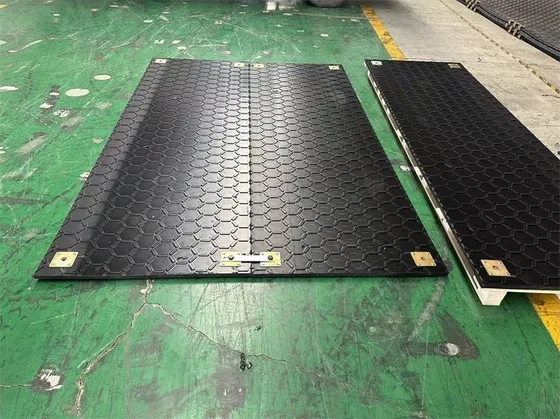 Heavy-Duty
 HDPE crane mats — large-format plastic/composite crane mats for outrigger-to-outrigger platforms and crane walking paths. Factory direct.