
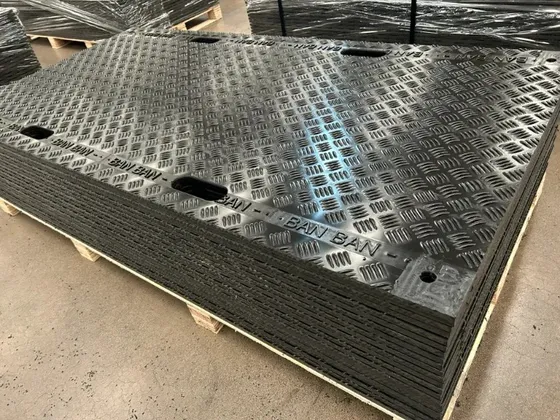
 Heavy-Duty
 Heavy-Duty Ground Protection Mat
Thicker, denser 4×8 ft heavy-duty ground protection mat for loaded trucks, dozers, and excavators.
- 4×8 ft
- 5/8–3/4 in
- ~50 kg
Products / Heavy-Duty
Large-format HDPE crane mats — plastic/composite panels moulded to carry the whole machine, not just one outrigger foot. They form the loading platform and walking path a mobile or crawler crane needs when the ground under the carrier will not take the load bare, linking edge to edge into a continuous, forklift-installed surface.
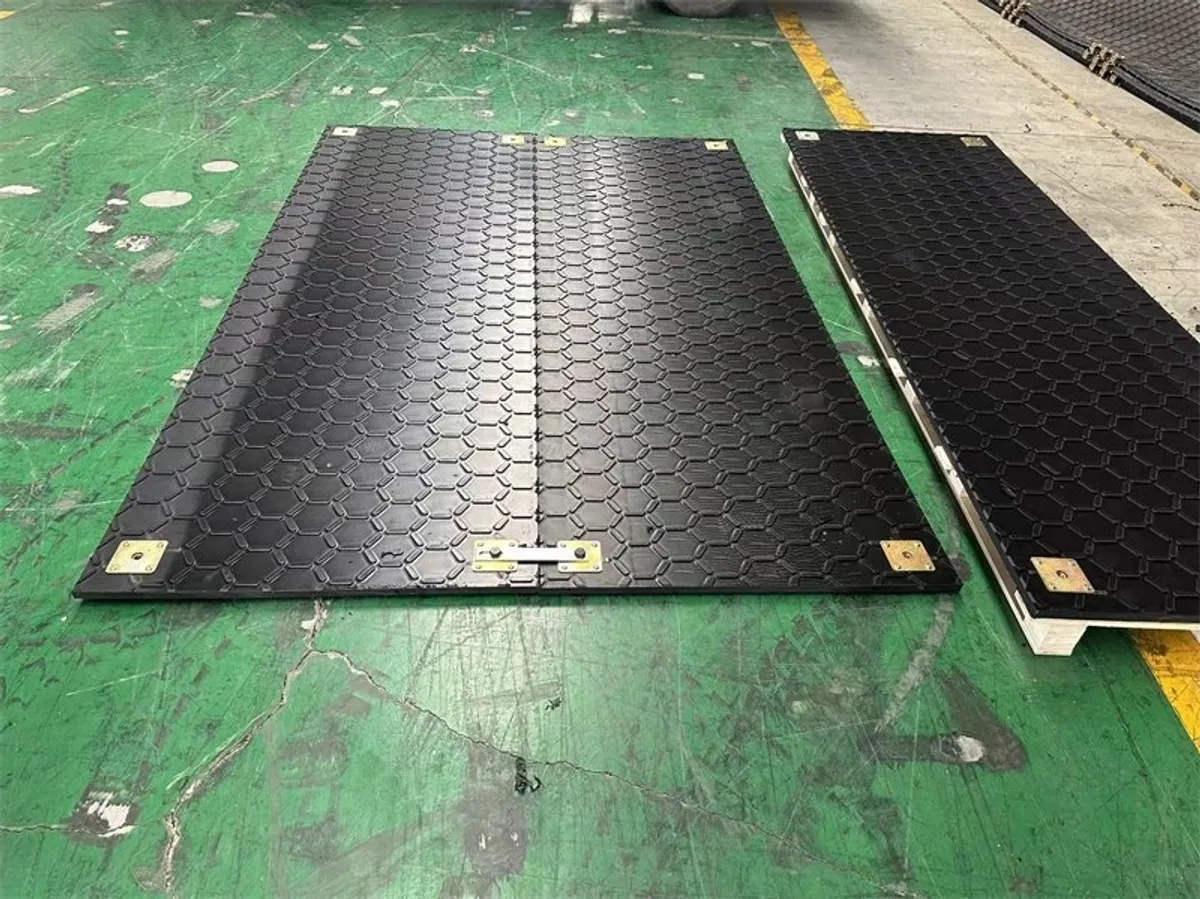
A crane outrigger pad spreads the point load under a single stabiliser foot. A crane mat does a different job: it is the platform the whole machine tracks, crawls, or picks-and-carries across — the loading zone under a mobile crane, the run a crawler crane walks along, or the temporary pad a rig sits on for the duration of a lift. HDPE crane mats are large-format composite/plastic panels moulded to carry that whole-machine load rather than one concentrated foot, so if you are pricing crane mats for sale, plastic crane mats, or composite crane mats, this is the product you want — for the outrigger foot itself, see our crane outrigger pads, and for a dedicated track-and-crawler mat built for the softest ground, see the extra-heavy track mat.
Timber crane mats have done this job for decades and are still common on rental yards, but they carry real handling and lifespan costs — heavy duty crane mats in HDPE avoid both by design. A single timber crane mat commonly weighs 500–1000 kg, so every mat move needs a crane or a loader — there is no hand-laying a timber platform. Left outdoors, timber absorbs rain and drilling fluid, swells, and starts to rot and delaminate within a season or two of hard use, and a rotten mat can hide a soft spot until it fails under load. HDPE panels close both gaps: the polymer will not absorb water or hydrocarbons, will not rot, and typically runs a 10+ year service life — the reason synthetic crane mats have replaced timber across most fleets — and smaller panels are light enough for one or two people to place without plant on site.
| HDPE crane mat | Timber crane mat | |
|---|---|---|
| Weight | ~120–450 kg by size — smaller panels are a hand or two-person lift | ~500–1000 kg — always needs a crane or loader to move |
| Water & chemicals | Will not absorb, swell, or rot | Absorbs water and fluids; swells and rots over time |
| Typical service life | 10+ years, reusable across programs | 2–5 years outdoors before replacement |
| Hidden damage | Cracks and wear are visible on the surface | Internal rot can hide under a sound-looking face |
Crane mats for rent suit a short, one-off lift — a single crane pick, a weekend job, or a site you will not revisit — where a day rate is simpler than owning equipment you will use once. For programs with repeat lifts, seasonal crane work, or a fleet that moves between sites regularly, buying factory-direct usually costs less over a year than the accumulated day rate, and you are not queuing for availability when a rental yard is short on stock during a busy season. We sell direct from the factory, quoted by area covered, so whether you need a handful of panels for a single loading zone or a container load for a multi-crane program, the price scales with the job rather than a rental company’s margin.
A crane mat platform is sized to the crane’s outrigger spread and the working radius it needs to cover, not to a single point load — that is the difference from an outrigger pad, which is sized foot by foot. Panels from 6×8 ft up to 8×20 ft, in 1.5–4 in thickness, link edge to edge with an overlapping flange and locking-pin joint into a continuous platform rated to roughly 600–828 psi bearing on a competent sub-grade. Thinner, lightweight crane mats handle by hand or with a small loader; the largest panels are a forklift or telehandler install, the same trade-off as our extra-heavy track mat, which doubles as crawler crane mats for the heaviest track routes. Match thickness and bearing to the crane’s outrigger loads and the ground, not just to the tonnage on the load chart.
Both, usually — they solve different problems on the same job. Outrigger pads go under each individual stabiliser foot to spread that point load; a crane mat is the platform underneath and around the whole machine, used when the crane needs to track, crawl, or set up across ground that will not take the load bare. A typical mobile-crane setup uses outrigger pads at the four feet plus a crane mat platform under the carrier if the working area itself is soft; a crawler crane that walks the site instead generally needs mats under the tracks the whole way, which is what our extra-heavy track mat is built for.
Crane mat panels take heavier, more concentrated traffic than a hand-portable ground mat, so a quick check before each use matters: look for cracks through more than a third of the panel thickness, confirm the flange and locking-pin joints are not deformed or missing pins, and clear mud or debris from the joint before panels lock together — a joint that cannot seat fully leaves a step that a tracked machine can catch. HDPE will not rot, corrode, or absorb water in storage, so panels stacked flat between jobs need no more upkeep than an occasional inspection; a panel that fails that inspection should be pulled from the platform rather than risked under a working crane.
A single loading zone might need only a handful of panels; a multi-crane program covering several pick locations needs enough to build a continuous platform at each one, plus spares for panels rotated out of a busy site for inspection. We quote by area covered rather than by the panel, so a project engineer working from a site layout can size the order directly from the footprint the crane needs rather than guessing at a panel count, and we can supply custom panel lengths where a site’s existing connector pattern or access route calls for a non-standard size.
A crane mat spreads load — it does not replace a prepared sub-grade the way structural fill or a compacted base does. On genuinely soft or saturated ground, level and compact what you can before laying the platform, and where the ground is peat, marsh, or standing water, a larger-footprint mat built specifically for that condition, like our extra-heavy track mat, will outperform a standard crane mat panel. Match the platform to the ground the same way you would match an outrigger pad to bearing pressure: the mat is the last step in getting a safe working surface, not a substitute for the ground itself.
Not really — composite crane mats and plastic crane mats both usually mean the same HDPE panel described on this page; "composite" tends to get used on oilfield and pipeline jobs, "plastic" on general construction and event sites, and the product underneath the name is the same moulded polymer platform. Some suppliers also list them as composite crane pads, though "pad" more often refers to the smaller outrigger-foot product rather than this full platform. What does vary between suppliers is the resin grade, the wall thickness, and whether the panel is virgin or reclaimed material, which is why the weight, bearing rating, and expected service life are worth checking against a spec sheet rather than assumed from the name alone.
On a large site, crane mat platforms are rarely the only mats on the ground — a haul road built from interlocking access mats or a temporary roadway panel often brings the crane in, outrigger pads take the point loads at each stabiliser foot, and the crane mat platform covers the working area in between. Planning all three together, rather than ordering the crane mats alone, is what keeps a heavy lift moving without a gap in the matted surface for a wheel or track to find.
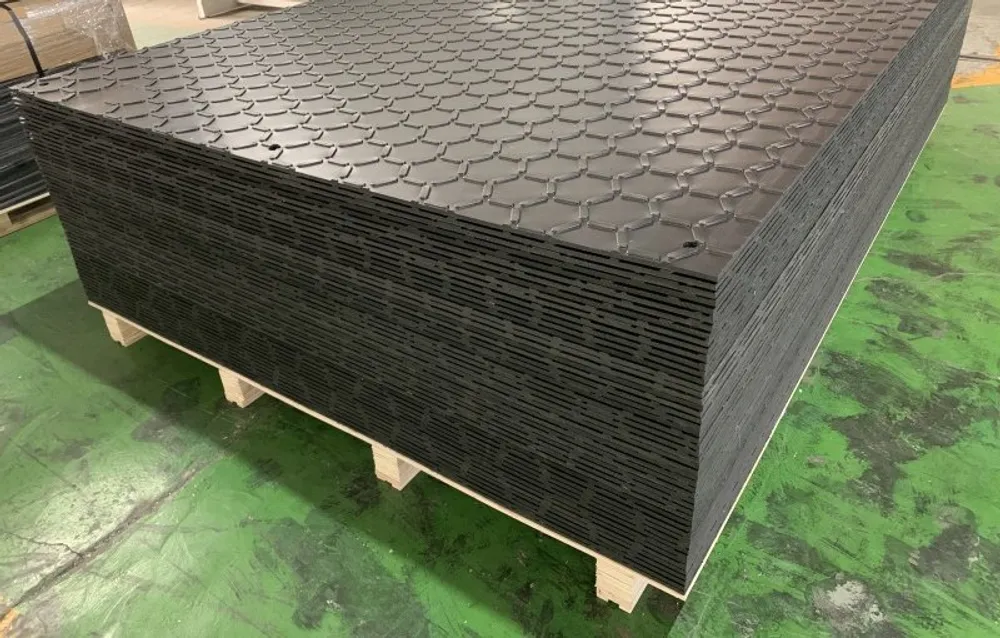
| Size | 6×8 ft up to 8×20 ft |
|---|---|
| Thickness | 1.5–4 in (38–100 mm) |
| Weight | ~120–450 kg by size |
| Bearing | ~600–828 psi (~42–58 kg/cm²) |
| Joint | Overlapping flange + locking pin |
| Material | HDPE / composite |
Quoted load figures assume a competent, evenly prepared sub-grade. A mat spreads and distributes load — it does not turn soft ground into hard standing — so size to ground bearing pressure (load ÷ contact area).
For most fleets, yes. A timber crane mat weighs 500–1000 kg and always needs a crane or loader to move, absorbs water and drilling fluid, and typically needs replacing within 2–5 years outdoors. HDPE crane mats — sometimes called poly crane mats — run ~120–450 kg by size — small panels are a hand lift — will not absorb water or rot, and hold up for 10+ years, so the higher price per panel is offset by fewer replacements and easier handling.
An outrigger pad spreads the point load under one stabiliser foot. A crane mat is the larger platform the whole machine tracks, crawls, or sets up on when the ground itself will not carry the load. Most crane jobs on soft ground use both: outrigger pads at each foot, and a crane mat platform under and around the carrier or crawler tracks.
Tell us quantity, destination port, and any questions — we reply within one business day.
Heavy-Duty Thicker, denser 4×8 ft heavy-duty ground protection mat for loaded trucks, dozers, and excavators.
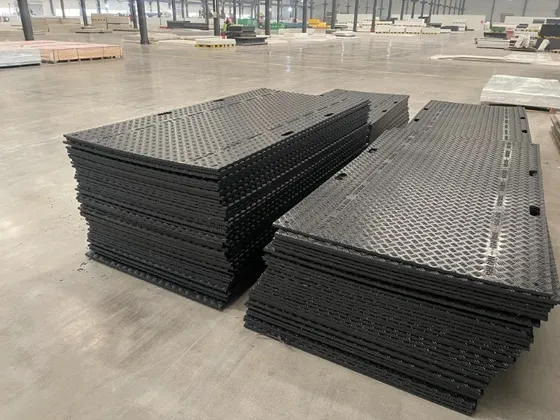 Heavy-Duty
 Large-format bog mat, crane mats, and track mats for heavy equipment — floats the heaviest plant over the softest ground.
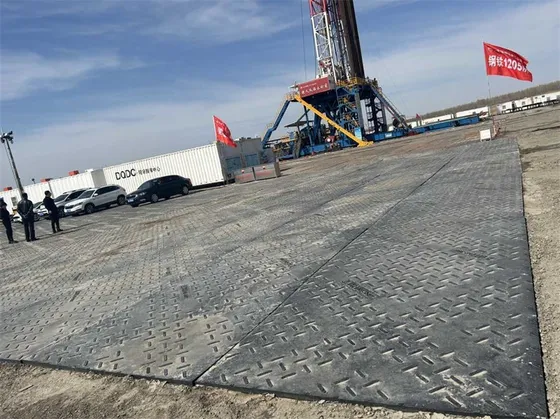 Heavy-Duty
 Heavy-duty rig mats for oil & gas — chemical & temperature resistant oilfield mats.