
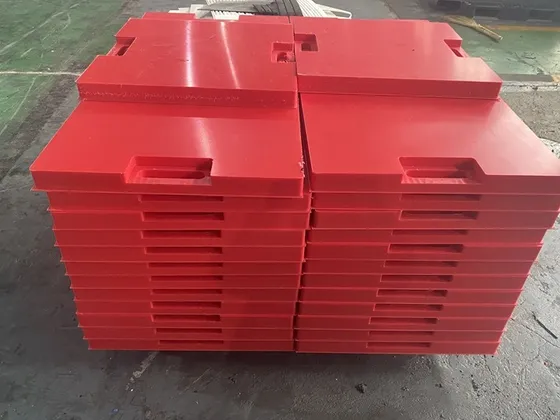
 Outrigger Pads
 Crane Outrigger Pad (Square)
Square crane outrigger pads (crane pads) that spread crane & MEWP outrigger loads.
- 450–1200 mm
- 1–4 in
- handle
Products / Outrigger Pads
A circular HDPE pad ideal for MEWPs, boom lifts, and smaller cranes — the round form seats neatly under cylindrical feet and is easy to roll and stow, giving even load distribution over soft ground with a quick-grab handle.
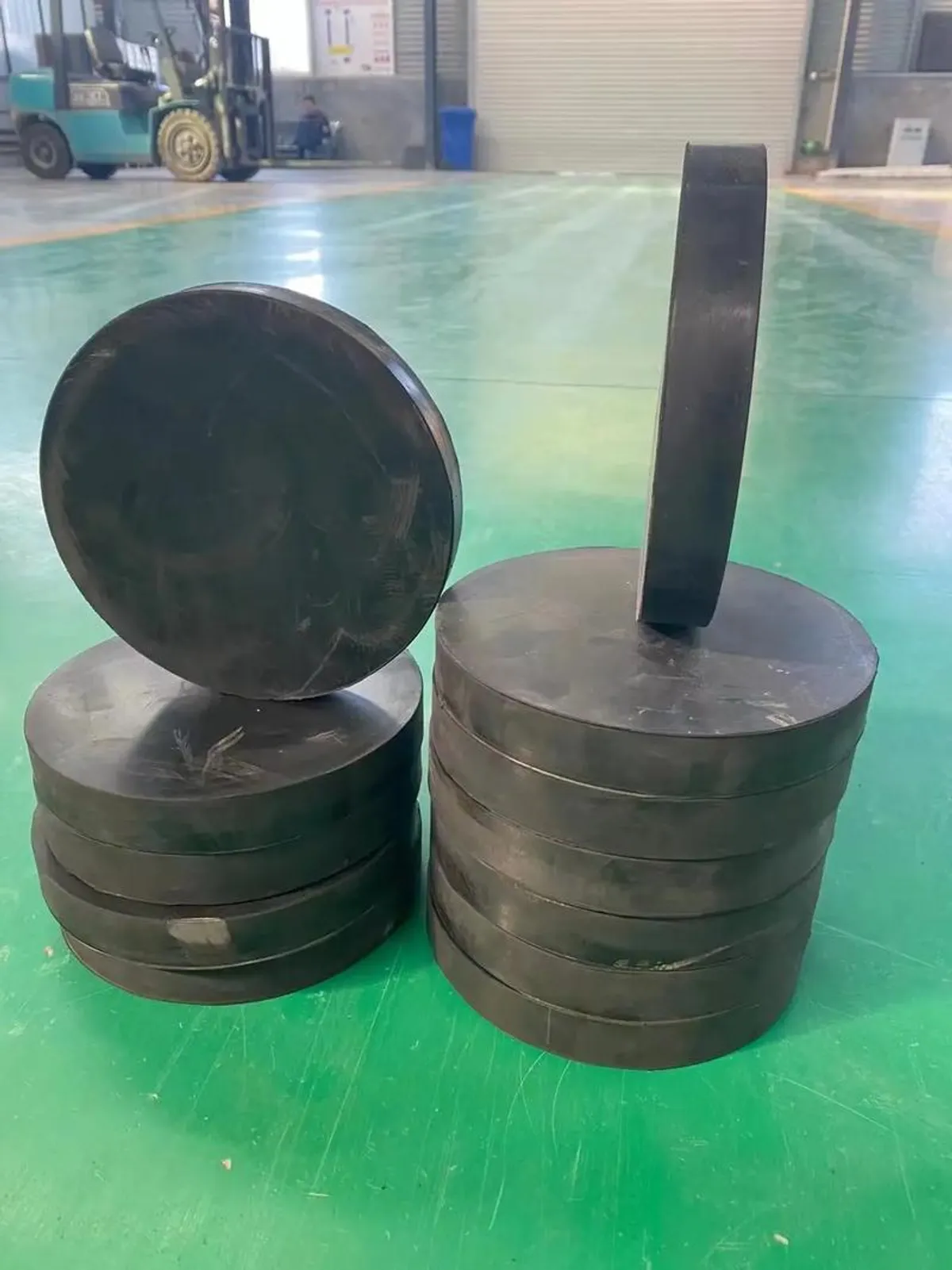
Boom lifts, spider cranes, and MEWPs mostly land on round outrigger feet, and a round pad seats them better than a square one — the load sits central instead of overhanging a corner. These outrigger pads — also known as outrigger plates — come 12–48 in (300–1200 mm) in diameter to spread the foot load over soft ground and stop the leg punching in. A round crane pad seats a circular float squarely, which is why outrigger foot pads on many truck cranes are round rather than square.
A 36 or 48 in pad is awkward to carry flat but easy to roll on edge like a wheel, so one operator moves it around the machine and stows it on the truck without a lift — no crew needed to shift it the way flat outrigger boards demand. At 3/4–2 in thick it is light enough to handle yet stiff enough to spread pressure without dishing under the float.
Size the same way as any pad — whether you call them stabiliser pads or outrigger jack pads: outrigger load ÷ ground bearing pressure sets the diameter you need. Vertical working load limit runs from about 6 t on the smaller discs to roughly 90 t on the largest, covering service-vehicle jacks through to small mobile cranes. On very weak ground, step up a size rather than risk a leg settling mid-lift — see the crane outrigger pads sizing guide.
Spider and boom-lift outriggers, small mobile cranes, bucket trucks (outrigger pads for bucket truck duty), and service-vehicle stabiliser jacks. These round outrigger pads — sometimes called outrigger mats — seat cylindrical feet best; for the larger floats and spreader feet of bigger mobile cranes, the square crane outrigger pad gives more area and a flatter seat.
Not every outrigger foot is flat and square. Boom lifts, spider cranes, and many stabiliser jacks land on a round steel foot that pivots as the machine levels itself, and the round shape tracks that rotation without a corner lifting clear of the ground the way a square plate can. The same profile suits circular floats on truck-mounted cranes and MEWP outriggers, and because there is no corner to catch, these outrigger plates seat evenly even if the machine settles slightly off-centre during setup. Where a job also means moving pads often between short stops, the ability to roll rather than carry flat — covered above — is the second reason crews standardise on round outrigger pads for spider cranes and boom lifts even where a square foot pad would technically fit.
Round outrigger pads scale the same way square ones do — bigger diameter and thicker section raise the vertical working load limit — but it helps to see the diameter-to-WLL relationship laid out before you order.
| Diameter | Thickness | Vertical WLL |
|---|---|---|
| 12 in (300 mm) | 3/4 in (19 mm) | ~6–10 t |
| 18–24 in (450–600 mm) | 1 in (25 mm) | ~10–25 t |
| 30–36 in (750–900 mm) | 1.5 in (38 mm) | ~25–55 t |
| 42–48 in (1050–1200 mm) | 2 in (50 mm) | ~55–90 t |
Yes. A round pad seats a square or rectangular foot as long as the diameter comfortably covers the foot’s footprint with margin on every side — it is the shape of the ground contact that matters, not a strict match to the foot shape. The reverse is less forgiving: a square pad under a round, pivoting foot can rock or catch a corner as the machine levels itself, which is the main reason to choose round outrigger pads for cylindrical or self-levelling feet rather than the other way round.
Round pads take the same abuse as square ones and need the same quick look-over: check for cracks or gouges that eat into the load-bearing section, confirm the handle or rope grip is intact, and wipe off mud or oil before the pad goes back under a foot. Because they roll, these pads pick up more edge wear over a season than a pad that is only ever carried flat — inspect the rolling edge specifically for flat spots or chips, since that is where repeated ground contact concentrates wear. HDPE will not rot or corrode in the truck between jobs, so storage is simply stacking flat or racking upright; no oiling, greasing, or re-coating is needed the way timber or steel packing demands.
Before pre-moulded outrigger boards became common, crews improvised with whatever was on the truck — a scrap of plywood, a length of timber, or a flat steel disc cut to size. None of those give a consistent, rated working load limit, and none roll for one-person handling the way a purpose-moulded pad does. A moulded pad also has a known diameter and thickness, so the sizing calculation — outrigger load ÷ ground bearing pressure — actually means something; a scrap board with an unknown load rating is a guess dressed up as a solution, and it is exactly the kind of shortcut that shows up in mobile-crane tip-over investigations.
Fleets that move equipment between sites often standardise on round outrigger pads specifically because they roll: a 36 or 48 in pad tucks against the machine or into a toolbox rack without needing a lifting point, and a driver loads and unloads it without help. For rental companies running MEWPs and small cranes across many short hires, that single-operator handling matters as much as the working load limit — a pad nobody can move without help ends up left behind, and a pad left behind is a machine set up bare on soft ground.
| Diameter | 12–48 in (300–1200 mm) |
|---|---|
| Thickness | 3/4–2 in (19–50 mm) |
| Vertical WLL | ~6–90 t by size |
| Material | HDPE |
| Color | Black |
| Handle | Rope / cut grip |
Quoted load figures assume a competent, evenly prepared sub-grade. A mat spreads and distributes load — it does not turn soft ground into hard standing — so size to ground bearing pressure (load ÷ contact area).
A round pad seats cylindrical feet — MEWPs, boom lifts, and smaller cranes — more centrally than a square one, and at 36–48 in it rolls for one-person handling instead of needing a lift. A square pad puts more area under a large float or spreader foot, so bigger mobile cranes usually take the square shape instead.
Vertical working load limit runs from about 6 t on the smaller 12 in discs up to roughly 90 t on the largest 48 in pads. Size the diameter by outrigger load ÷ ground bearing pressure, and on very weak ground step up a size rather than risk a leg settling mid-lift.
Tell us quantity, destination port, and any questions — we reply within one business day.
Outrigger Pads Square crane outrigger pads (crane pads) that spread crane & MEWP outrigger loads.
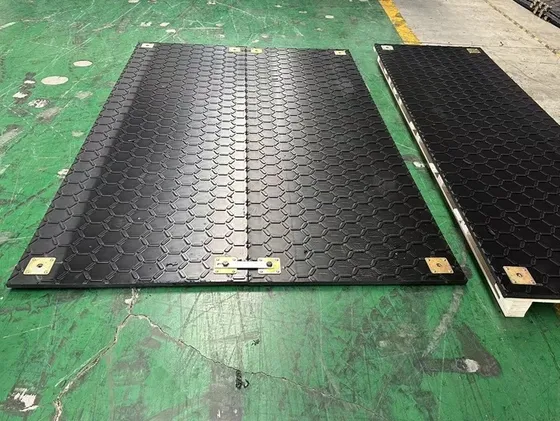 Ground Protection
 The everyday 4x8 ground protection mat — black HDPE / plastic ground protection sheets, reversible tread, hand-portable, reusable for years.
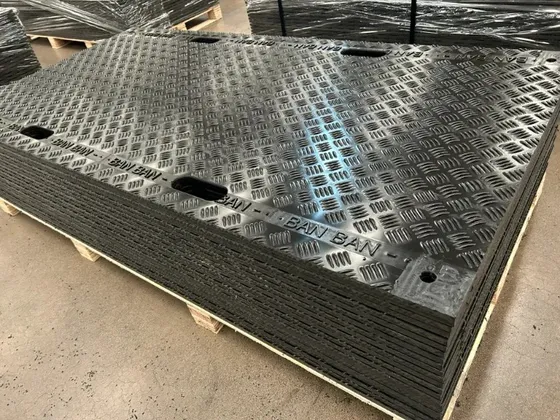 Heavy-Duty
 Thicker, denser 4×8 ft heavy-duty ground protection mat for loaded trucks, dozers, and excavators.