
Ground Protection for a Metro Tunnel Boring Drive
2026-05-20 · Infrastructure / Tunnelling · East Asia
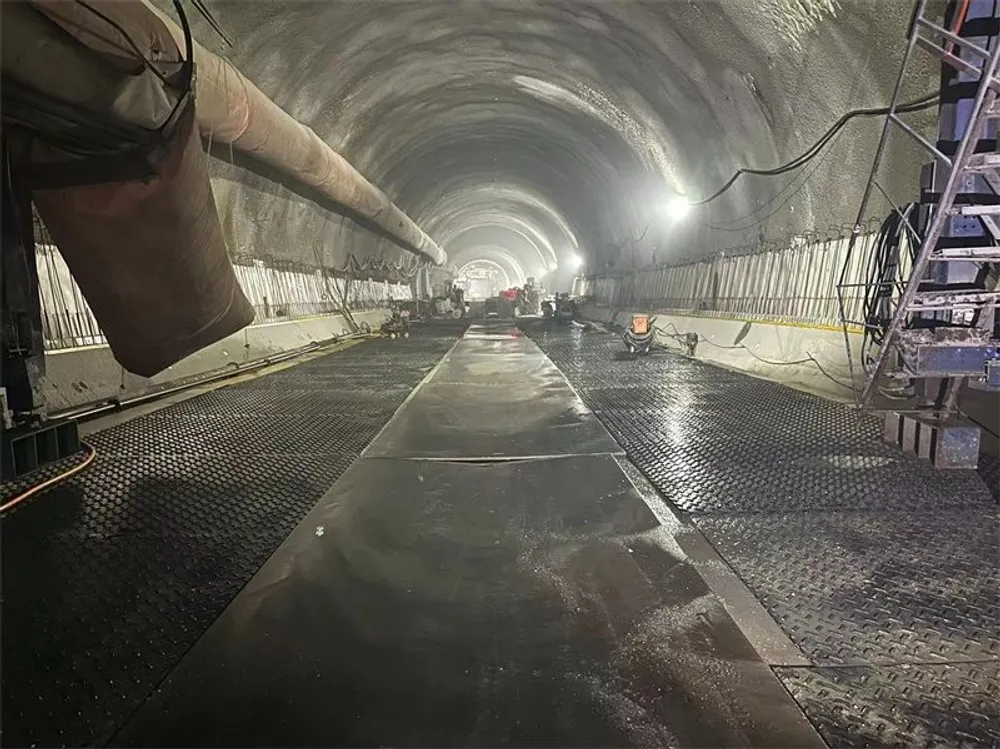
Heavy-duty mats protected a wet tunnel invert and kept material transport moving on a metro tunnel construction drive.
Inside the bore
On a metro tunnel drive in East Asia, the newly shotcreted arch stays wet from grouting and washdown water long after the concrete has gone off, and the invert carries a steady stream of rail carts, service vehicles, and foot crews moving material and equipment toward the face. Temporary cabling and utilities run along both walls, leaving a narrow working lane down the centre, and lighting is limited to temporary strings, so anything underfoot has to be easy to see and predictable to walk on.
The problem underfoot
A bare invert slab stays slick through most of the drive, and vehicle tyres drag mud and grout washout back toward the portal. The permanent tunnel floor is not poured until much later, so the contractor needed a temporary running surface that could open the tunnel to traffic straight away without marking or damaging the curing concrete underneath.
Two products, one lane
The centre of the lane, under the rail-cart wheels, needed the higher point-load rating of the heavy-duty mat. Along the edges, where only foot traffic and light hand carts pass, the lighter roadway panel was enough, and easier for one person to lift and reposition in the confined space between the wall and the working face. Splitting the lane this way kept the total weight of matting hauled into the bore lower, which matters on a drive where every tonne carried in also has to be carried back out.
The mat road
The crew laid the panels end to end along the invert centreline to form a dedicated running lane. The textured deck holds traction on wet concrete, and interlocking panels stayed in line under repeated rail-cart passes. As the face advanced, the crew simply lifted the rearmost sections and relaid them further up the bore rather than carrying in fresh matting each time.
Result
Over a drive of roughly 600 metres, the same mats were relaid at each advance stage rather than replaced, keeping tyre marks and grout staining off the new concrete and cutting the time crews spent scraping dried residue off the invert before each pour. The panels have now been through several advance cycles with no need for replacement, and the crew hoses the mats down between shifts rather than the concrete itself. When the drive reached its next milestone, the same set of matting was handed over to the follow-on fit-out crew to protect the invert through cable and track installation as well.
Want details or a quote? Contact us — we reply within one business day. Or browse the product range.
Request a QuoteRelated case studies
2026-08-01
Bulk Container Order for an Overseas Rental Fleet
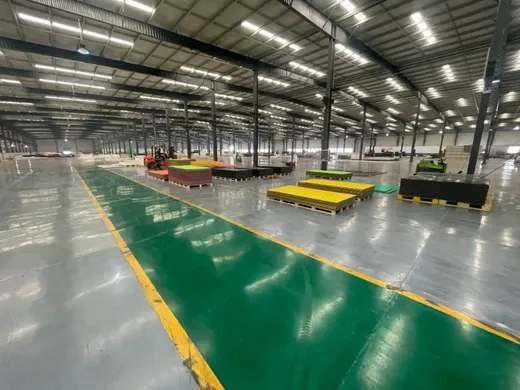
A container-scale order of heavy-duty and standard mats moved from press mould to loaded pallet in weeks, ready to stock an overseas rental fleet ahead of its build season.
Read →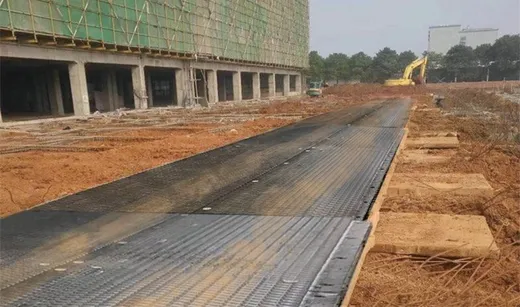
2026-07-05
A Temporary Site Road for Concrete and Material Trucks
Ground protection mats gave a mid-rise building site a stable haul road from the gate to the pour, keeping concrete mixer trucks moving through a wet spring.
Read →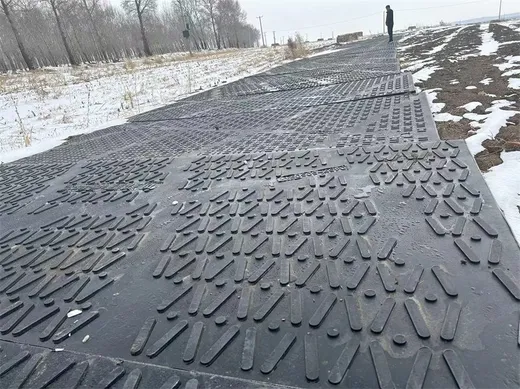
2026-06-10
A Winter Haul Road Across Frozen Farmland
Heavy-duty mats carried loaded delivery trucks across a freeze-thaw farm route, protecting topsoil and keeping pipe deliveries on schedule through a winter build window.
Read →